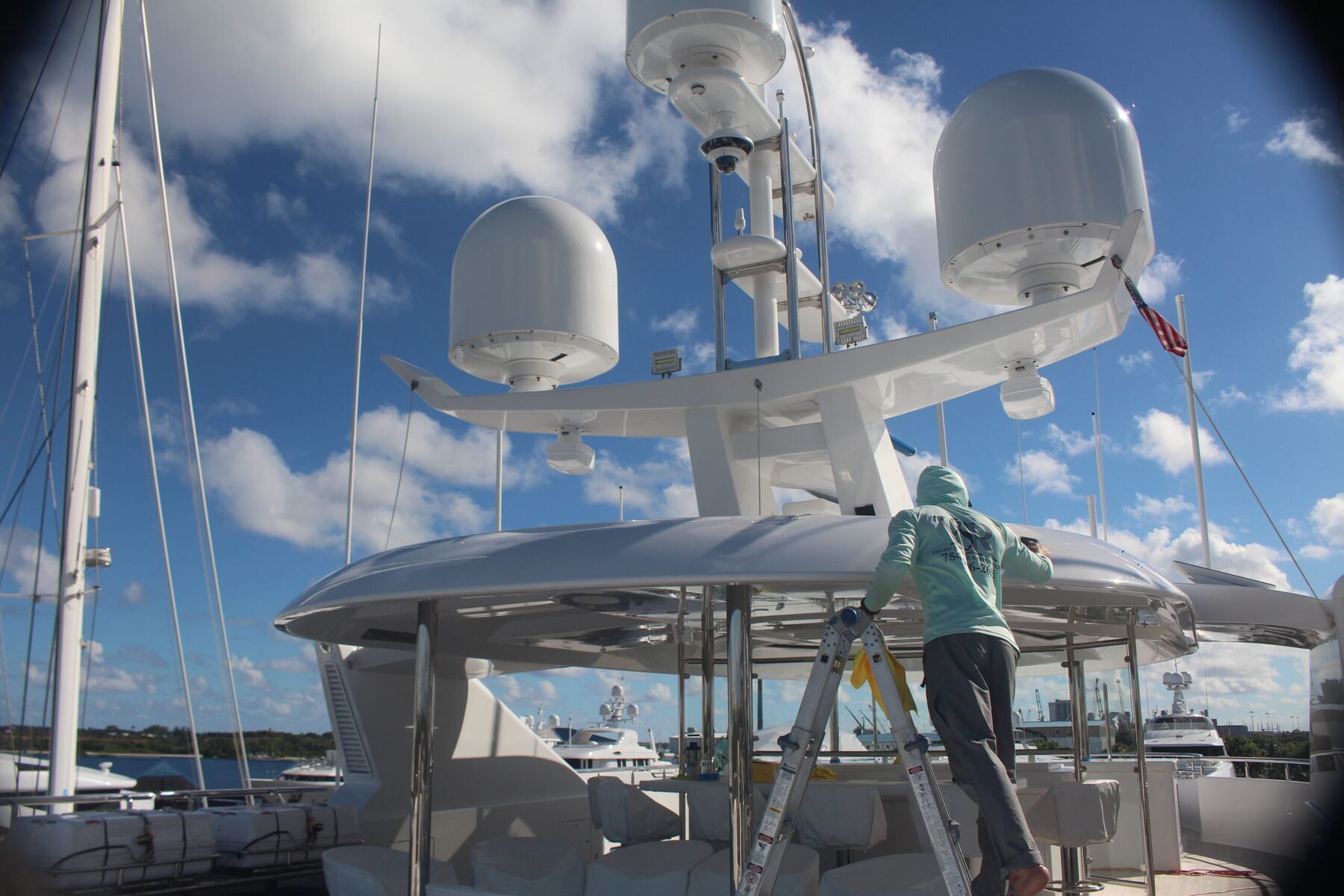
A great restoration only matters if it lasts. YSR finishes nearly every project with specialty Lat 26° coatings engineered specifically for the marine environment — they shrug off UV, salt spray, exhaust soot and the inevitable black streaks of life at the dock.
We apply Nano Ceramic and Carbon Guard layers tuned to each surface, leaving a deep, hydrophobic finish that's easier to maintain and dramatically slower to degrade than wax or polish alone.
What's included
- Lat 26° Nano Ceramic SiO₂ application
- Lat 26° Carbon Guard top coat
- UV and saltwater protection
- Exhaust soot and black streak defense
- Multi-year hydrophobic performance
- Compatible with gelcoat, paint and metal
Why marine ceramic is different from automotive ceramic
Automotive ceramic coatings are formulated for road grime, brake dust and seasonal UV. Marine ceramic must withstand 24/7 salt exposure, intense year-round tropical UV, exhaust soot, fender wear, dockside black streaks and aggressive boat soaps. Putting an automotive coating on a yacht in South Florida is a recipe for early failure.
Lat 26° Nano Ceramic was engineered from the ground up for marine surfaces — gelcoat, paint, metal and glass. The chemistry is harder, the bond is stronger, and the hydrophobic performance lasts dramatically longer in the conditions that destroy other coatings.
Nano Ceramic vs Carbon Guard — which (and when)
Lat 26° Nano Ceramic is the foundation: a SiO₂-based coating that bonds to the surface, fills micro-porosity, and creates a hydrophobic, UV-stable, slick top layer. Carbon Guard is a carbon-reinforced top coat that adds additional wear resistance, exhaust-stain repellency and black-streak defense.
Smaller vessels and low-use boats usually do well with Nano Ceramic alone. Sport-fish boats, charter yachts, and superyachts taking heavy exhaust or fender wear benefit from the layered system.
Surface prep is 90% of the result
Ceramic coatings bond to a chemically clean, defect-free surface. Skip the prep and the coating fails — fast. Every YSR ceramic project starts with full decontamination, correction (compound and polish), and panel wipe before a single drop of coating touches the boat.
Coatings applied over swirl marks, oxidation or contamination lock those defects in for the life of the coating. We never do that.
Maintenance after coating
Ceramic-coated surfaces still need to be washed — they just wash dramatically easier and stay cleaner longer. We recommend pH-neutral marine soap, soft mitts, and a quarterly ceramic-safe maintenance booster to extend the coating's life. We provide a written care guide and stock the products owners and crews need.
Our process
- 01Pre-coating inspection
Confirm surface is suitable for coating; identify any correction work needed first.
- 02Full decontamination
Wash, iron fallout removal, clay bar and chemical decontamination.
- 03Correction (as needed)
Compound and polish to remove defects that would otherwise be locked under the coating.
- 04Panel wipe
IPA or proprietary panel prep to remove all oils and residues.
- 05Nano Ceramic application
Controlled-environment application with proper flash and cure intervals.
- 06Carbon Guard layering (optional)
Additional carbon-reinforced layer for high-wear vessels.
- 07Cure period & inspection
Vessel remains undisturbed for full cure; final inspection and documentation.
- 08Maintenance plan
Written care guide and recommended booster schedule.
Ideal for
- Newly restored or freshly painted vessels
- Sport-fish boats facing constant exhaust and salt spray
- Motor yachts and superyachts seeking multi-year protection
- Owners minimizing cleaning labor and wash chemistry
- Brokerage prep for show-quality finishes
Products & technology
- Lat 26° Nano Ceramic Coating (marine SiO₂)
- Lat 26° Carbon Guard top coat
- Lat 26° ceramic-safe maintenance boosters
- Marine panel prep / IPA wipe
Frequently asked questions
Properly applied and maintained, Nano Ceramic typically lasts 2–4 years on gelcoat and paint. Carbon Guard layered on top extends wear life on high-exposure vessels.
No. Coatings protect a corrected surface — they don't repair existing damage. Restoration first, coating second.
Wax on top of ceramic is unnecessary and can actually shorten the coating's performance. Use a ceramic-safe maintenance booster instead.
Yes — the labor savings on washes and the slower oxidation cycle pay back quickly even on vessels under 40'.
Search topics covered on this page
Plan your ceramic coatings project
Review completed finish work, confirm mobile availability across South Florida, or request a written estimate specifically for ceramic coatings.