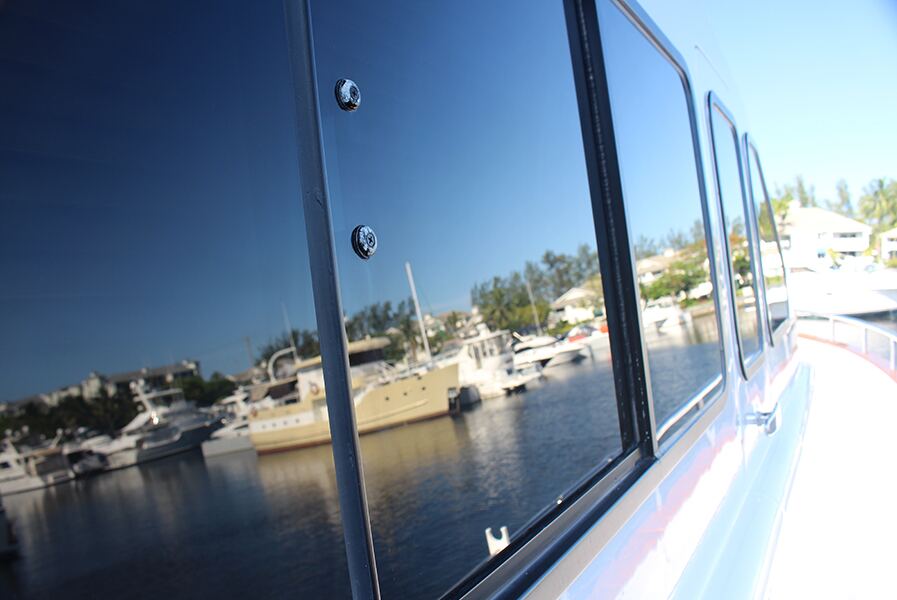
Marine glass is overwhelmingly tempered to withstand wave pressure, salt and constant sun. While the glass itself holds up well, the surface degrades — etched water spots, discoloration, micro-scratches, nicks and gouges are everyday problems on the water.
Understanding the differences between marine glass types is a skill that only comes with training and experience. YSR polishes and restores marine glass, then applies hydrophobic coatings — from sacrificial top-ups to one-to-three-year protection systems — to keep visibility crystal clear.
What's included
- Water spot and mineral deposit removal
- Micro-scratch correction
- Discoloration and contaminant removal
- Hydrophobic sacrificial coatings
- 1–3 year hydrophobic protection systems
- Helm, salon and side glass restoration
Why salt water etches marine glass
Salt spray dries on glass and leaves behind a mineral matrix that bonds chemically to the silica surface. Left untreated through repeated cycles of spray + sun, the deposit etches the glass itself — and at that point, no amount of cleaning will remove it. The damage is now in the glass, not on it.
The fix is mechanical: cerium oxide polishing with controlled pads and pressure removes a microscopically thin layer of glass to bring the surface back to optical clarity. It requires the right slurry, the right pad, and the right operator — wrong execution leaves distortion.
Helm, windshield and side glass
Helm visibility is a safety issue, not a cosmetic one. Etched windshields scatter sun, hide other vessels at sunrise and sunset, and turn rain into a blur. YSR prioritizes helm glass on every restoration and seals it with a hydrophobic coating that beads water at speed for dramatically better visibility.
Hydrophobic coatings — sacrificial vs long-life
Sacrificial coatings (Aquapel, Rain-X marine grade) are inexpensive, last weeks to a few months, and reapply easily. Long-life systems (Diamon-Fusion, ceramic glass coatings) are professionally applied, last 1–3 years, and dramatically reduce salt deposit etching over time.
For high-use vessels and superyachts the long-life system pays for itself in reduced cleaning labor and slows the etching cycle that destroys helm visibility.
Our process
- 01Inspection under raking light
Identify etching, contamination, scratches and distortion under low-angle light.
- 02Pre-clean and decontamination
Remove surface salt and mineral deposits before polishing.
- 03Cerium oxide polishing
Controlled-pressure polishing with marine glass slurry removes etching and restores optical clarity.
- 04Light scratch correction
Targeted polishing for fine scratches; deeper damage flagged for replacement quoting.
- 05Surface prep
Solvent wipe to remove polishing residue before coating.
- 06Hydrophobic coating
Apply sacrificial or 1–3 year system per owner preference.
- 07Care guide
Recoat schedule and washdown best practices.
Ideal for
- Helm windshields and salon windows
- Side glass and overhead skylights
- Vessels with etched water spots that won't wipe off
- Superyachts seeking long-life hydrophobic coatings
- Charter and rental fleets prioritizing helm visibility
Products & technology
- Cerium oxide marine glass polishing slurry
- Diamon-Fusion long-life hydrophobic coating
- Aquapel sacrificial hydrophobic treatment
- Marine-safe mineral deposit removers
Frequently asked questions
Yes — when caught early they wipe off with the right chemistry. Once they've etched the silica, mechanical polishing is required. We assess and quote both paths.
Sacrificial coatings last 1–3 months; professional long-life systems last 1–3 years depending on use and exposure.
Correctly executed cerium polishing removes a microscopically thin and even layer — no distortion. Aggressive, uneven polishing can distort, which is why operator experience matters.
Search topics covered on this page
Plan your glass polishing project
Review completed finish work, confirm mobile availability across South Florida, or request a written estimate specifically for glass polishing.