
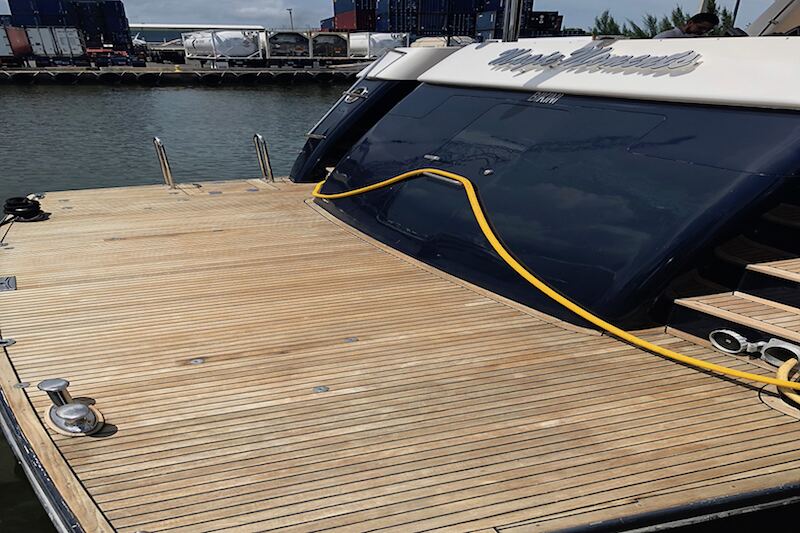
Teak and boats have gone together for two thousand years, and demand for teak in modern yachting continues to grow. With that comes an urgent need for products that safely clean, preserve and maintain the wood — and for people skilled enough to use them without damaging the surrounding gelcoat, paint and metal.
YSR has hands-on experience with virtually every teak product on the market. We know what helps and what harms teak — and the surfaces around it. We service your teak directly, and we also train crews and owners to do it themselves safely and effectively.
What's included
- Two-part cleaning and brightening
- Sealants, oils and varnish systems
- Old coating and Sikaflex residue removal
- Personalized finish: natural, oiled, sealed or varnished
- Caulk and seam repair coordination
- Crew and owner training available
Why teak turns gray (and why that's fine)
Untreated teak turns silver-gray as its natural oils oxidize and surface fibers weather. This is cosmetic, not structural — a properly maintained gray teak deck can last 20+ years. Restoring it to honey-gold blonde requires removing that weathered layer with a two-part acid/alkaline cleaner and brightener system, then deciding whether to leave it natural, oil it, or seal it.
The wrong choice here defines the next five years of teak maintenance for the boat. YSR walks owners through the trade-offs — finish appearance, weekly upkeep, recoat intervals and total long-term cost — before recommending a system.
Sealants, oils and varnishes — pros and cons
Penetrating oils (Semco, teak oil) look beautiful but require frequent recoats. Sealants (Awlwood, Sikkens Cetol) last longer but build a film that eventually requires stripping. High-build marine varnishes (Epifanes, Bristol Finish) deliver the deepest, glossiest look but demand strict maintenance. Natural / untreated teak is the lowest-maintenance option — accept the gray.
We've installed and removed every major system. The right answer depends on how much teak you have, who maintains it, and how the boat is used.
Caulking and seam integrity
Aging Sikaflex deck seams crack, lift and separate from the surrounding planks — letting water reach the bedding and eventually the substrate. We assess seam condition during every teak restoration and coordinate with marine carpentry partners for routing and recaulking when needed.
Training crew and owners
Many owners and full-time crews want to maintain teak themselves between professional restorations. YSR offers on-vessel training: product selection, tool use, two-part cleaning technique, recoat scheduling and the small habits that double the life of a finish.
Our process
- 01Teak condition assessment
Inspect plank thickness, fiber raise, prior finish system and seam condition.
- 02Pre-mask adjacent surfaces
Protect gelcoat, paint, metal and overboard drains from cleaner runoff.
- 03Two-part clean & brighten
Acid-stage cleaner removes weathered fibers and contamination; alkaline brightener restores color and neutralizes pH.
- 04Optional coating removal
Strip aged Sikkens, Awlwood, varnish or oil systems prior to refinishing.
- 05Light sanding (when needed)
With-the-grain sanding to smooth raised grain after wet cleaning.
- 06Finish application
Apply chosen system — natural, oil, sealant or varnish — per manufacturer specs and cure times.
- 07Seam inspection & repair coordination
Identify failing caulk; coordinate with carpentry partners as needed.
- 08Care plan & optional crew training
Written product/care guide and on-deck training if requested.
Ideal for
- Teak decks, cockpits and swim platforms
- Caprails, handrails and toerails
- Cockpit tables and exterior teak joinery
- Vessels with weathered, gray or peeling teak
- Owners considering switching finish systems
Products & technology
- Semco Teak Sealer
- Awlwood MA finish system
- Sikkens Cetol Marine
- Two-part teak cleaner / brightener systems
- Epifanes and Bristol Finish marine varnish
Frequently asked questions
It depends on use, look and maintenance tolerance. Oils give the most natural look with the most upkeep; sealants balance look and longevity; varnish gives the deepest gloss with the strictest schedule. We walk through trade-offs before recommending.
Light washdowns weekly. Two-part deep clean and brighten typically once per year. Refinish interval depends on system — 3–6 months for oils, 12–24 months for sealants, 6–12 months for high-build varnish in tropical sun.
Two-part cleaners remove a microscopic weathered layer — over a 20-year deck life, normal restoration removes a fraction of a millimeter total. Aggressive scrubbing across the grain causes far more loss than chemistry does.
Yes. We strip, sand and refinish — or change systems entirely if the owner prefers a different look.
Search topics covered on this page
Plan your teak restoration project
Review completed finish work, confirm mobile availability across South Florida, or request a written estimate specifically for teak restoration.